

How Precision Angioplasty Restored an 82-Year-Old’s Quality of Life
Dr. Harshal Ingle and his team recently managed a remarkable case that reinforces an important truth in modern cardiology—age alone should never limit access to advanced, life-improving care.
An 82-year-old gentleman, a long-standing diabetic with a history of previous angioplasties in 2006 and 2014, presented with progressively worsening breathlessness and chest pain. Despite being on optimal medical therapy, his symptoms had become severe enough to significantly restrict his daily activities and independence.
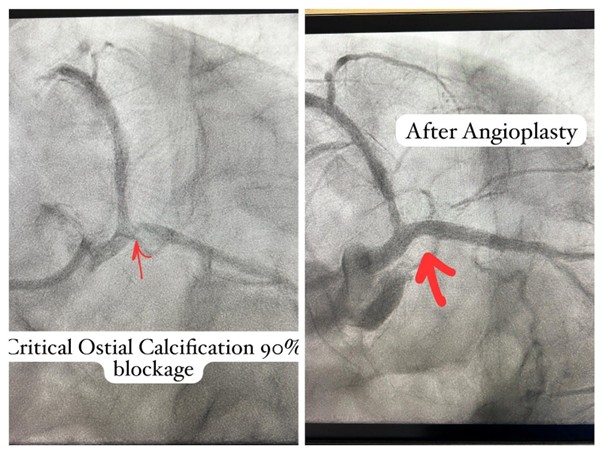
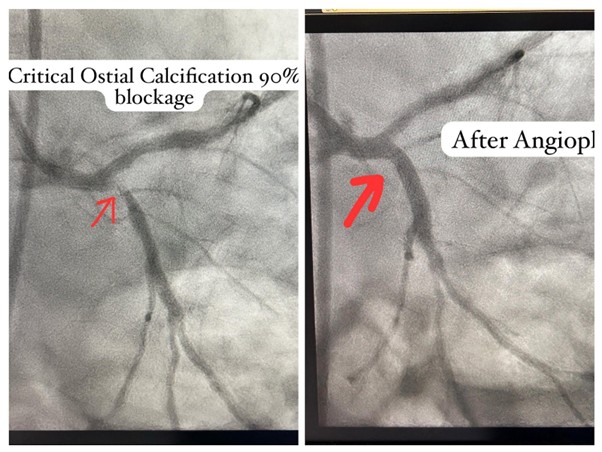
What made this case particularly challenging was his severely compromised heart function, with an ejection fraction of just 25%, along with critical, heavily calcified coronary blockages—including 90% narrowing of the Left Main and Left Circumflex (LM–LCX) arteries. Due to his advanced age, complex anatomy, and poor heart function, he had been advised elsewhere that angioplasty was too high-risk and that no further intervention was possible.
When the patient and his family sought a second opinion, Dr. Harshal Ingle conducted a detailed clinical and angiographic evaluation, focusing not only on procedural risk but also on the patient’s quality of life and unmet needs. After careful consideration, Dr. Ingle recommended a high-precision Left Main–Left Circumflex angioplasty with plaque debulking using a cutting balloon—a technically demanding intervention, but one that offered the best opportunity for meaningful symptom relief.
The procedure was performed with meticulous planning and advanced technique. Despite the complexity and high-risk nature of the case, the angioplasty was completed successfully, restoring blood flow through the critically narrowed vessels. Most importantly, the patient experienced dramatic improvement in symptoms, with significant relief from breathlessness and chest discomfort—allowing him to regain comfort, mobility, and confidence in daily life.
This case stands as a powerful reminder that personalized care must always come before assumptions based on age or risk labels. With thoughtful evaluation, advanced tools, and experienced hands, even patients considered “too high-risk” can benefit from modern interventional cardiology.
Dr. Harshal Ingle and his team are deeply honored to have played a role in helping this patient breathe easier and live better once again. The journey reflects a shared belief that heart health has no expiration date—and hope exists even in the most complex cases.