Dr. Harshal Ingle and his team recently managed a highly complex coronary case, demonstrating how advanced imaging and expert clinical judgment can offer effective, minimally invasive alternatives even in high-risk scenarios.
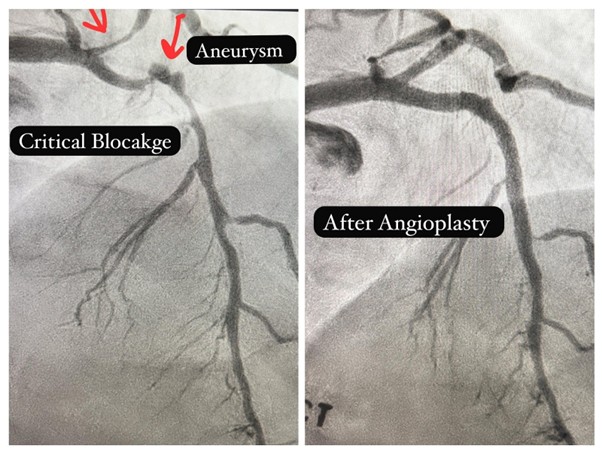
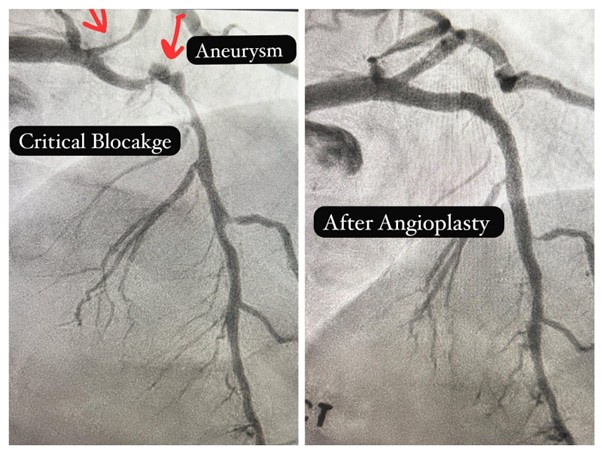
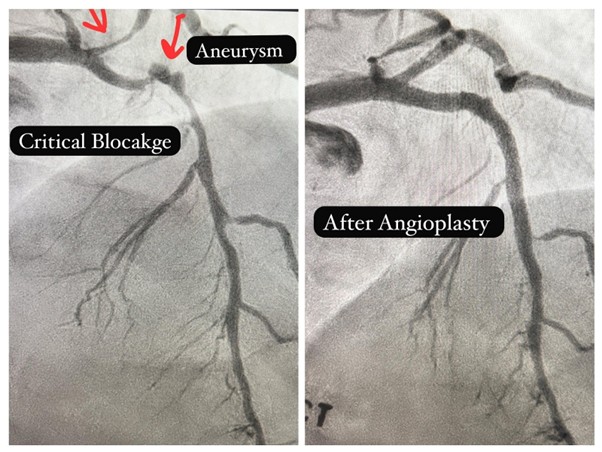
A 68-year-old gentleman presented with unstable angina and was diagnosed with critical triple vessel coronary artery disease, including a 100% occluded artery and a coronary aneurysm involving the Left Anterior Descending (LAD) artery. Given the complexity of the disease and the presence of an aneurysm, the patient had been advised coronary artery bypass surgery (CABG) at multiple centers.
Seeking clarity and reassurance, the patient approached Dr. Harshal Ingle for a second opinion. After a detailed review of the coronary angiogram and clinical condition, Dr. Ingle determined that a carefully planned, minimally invasive approach could be safely considered, potentially avoiding major surgery.
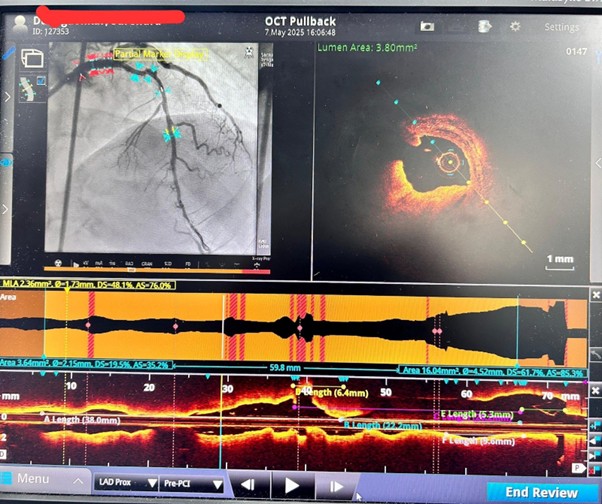
To ensure maximum precision and safety, the procedure was performed using Optical Coherence Tomography (OCT) guidance, an advanced intracoronary imaging technique that allows high-resolution assessment of vessel anatomy, plaque characteristics, and aneurysm morphology. OCT imaging enabled accurate evaluation of the critical blockages and the LAD aneurysm, allowing meticulous procedural planning.
With this advanced imaging support, Dr. Ingle successfully performed a complex coronary angioplasty, restoring optimal blood flow while preserving vessel integrity. The procedure was completed without complications, providing immediate symptom relief and eliminating the need for bypass surgery.
The outcome brought immense relief and reassurance to the patient and his family, reaffirming the value of expert evaluation and individualized treatment planning. This case highlights how cutting-edge imaging technology, combined with interventional expertise, can deliver safe and effective outcomes—even in patients traditionally considered surgical candidates.
Dr. Harshal Ingle and his team remain deeply grateful for the trust placed in them and continue to strive toward offering the best possible, least invasive cardiac care, tailored to each patient’s unique condition.